


Recent Happenings
Channel 5 with Andrew Callaghan released “The Gooniversary”, a story about the radicalization of mas******ion.
A soldier was charged for using classified data to bet on Polymarket. Hey, if members of Congress can bet on the stock market, why not?
Wait, Congress members are also insider trading on prediction markets?
President Obama was dubbed the first “social media president.” Obama was the first to have @POTUS on Twitter. Today, the White House not only has a Snapchat but also regularly posts AI slop on TikTok. But, what happens to these accounts after a presidential transition? While this question likely doesn’t impede your sleep, the National Archives and the Office of Digital Strategy have a formal procedure to handle the transition. In a nutshell, if you were following President Biden you found yourself following President Trump after. This is what POTUS means, much to peoples’ surprise. While jarring, this was consensual.
A much more jarring example took place in Paraguay. During the COVID era, many people were following social media accounts that transmitted information on vaccinations. This was one of the primary ways, for example, to find out about leftover vaccines. One such account was called InfoVacunatePY, which had ~22,000 followers on Twitter. After COVID was gone-zo, this account was no longer needed. But, some entrepreneurial mind realized that letting these 22k followers go to waste would be stupid. Why not redirect their attention to something new, something fresh? Overnight, InfoVacunatePY turned into HonorColoradoOk, an account affiliated with Paraguay’s leading conservative political party. This happened just as Paraguay headed into an election year.
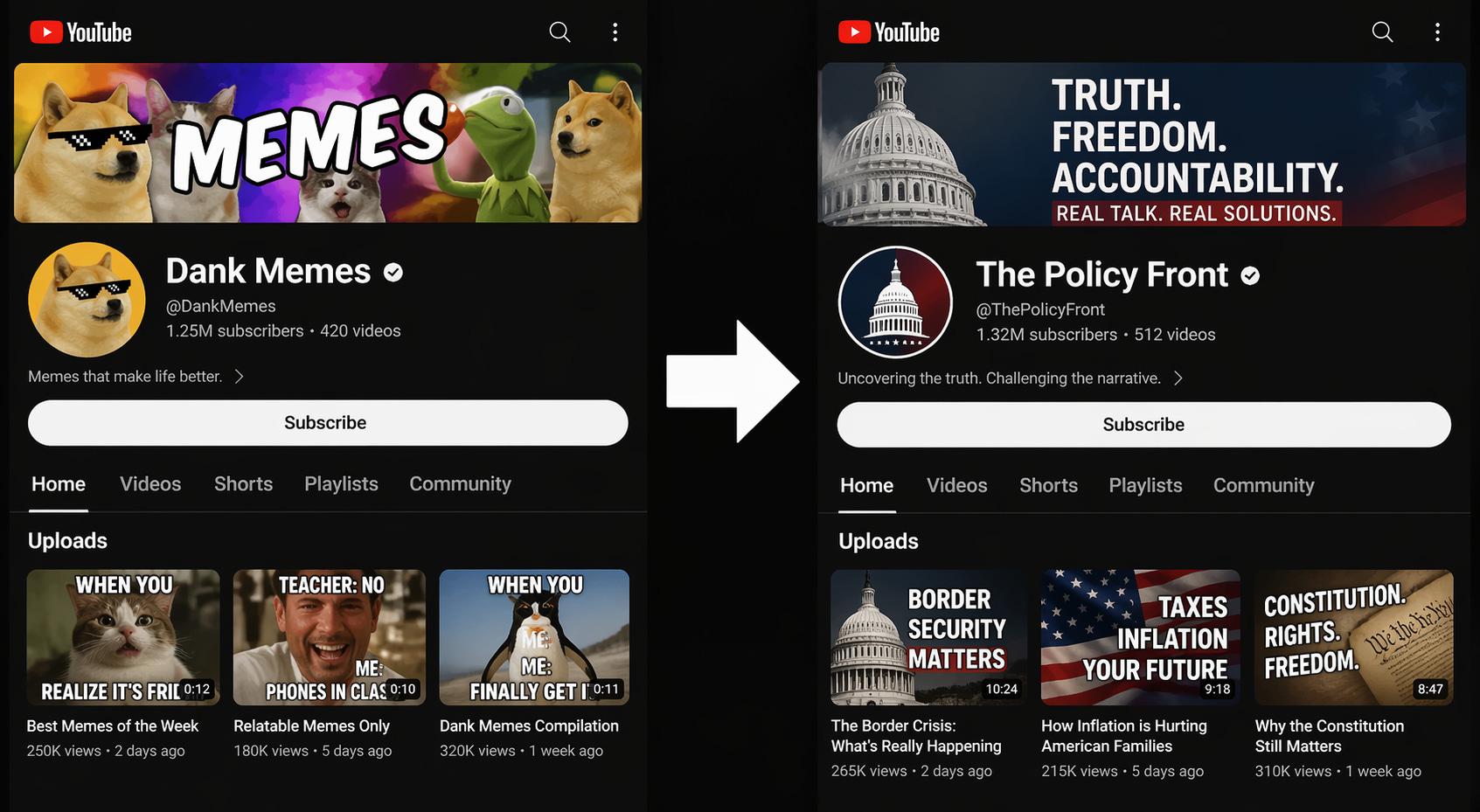
It is clear the person that repurposed the account had the incentives to do it: they either made money or gained political goodwill, or both. What is clear is that the people who signed up for COVID vaccination updates did not expect the account to later become one associated with a political party. If this was not noticed by users and later reported by the media, this case would’ve gone unnoticed, as many other accounts do.
It should come to no surprise that there’s a booming underground economy dedicated to all things social media, including the sale of accounts. People sell rare usernames like they used to sell domains. Bots. Shoutouts. Tools to automate your growth. Large accounts, small accounts, verified accounts, accounts based in the US, in India, Brazil, old accounts; various niches, demographics, age groups. What do you need?
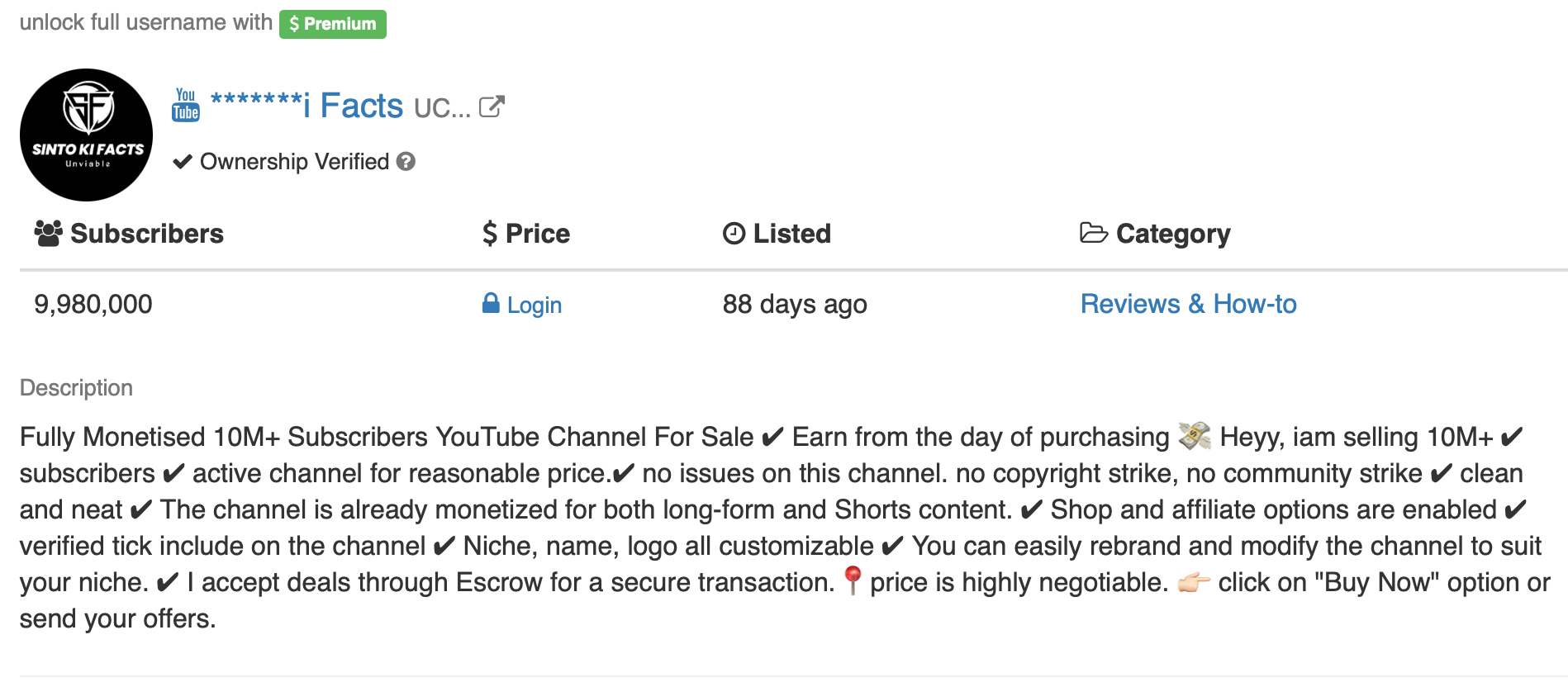
Having an online audience is valuable. There’s a reason we are all writing Substacks and LinkedIn posts. As reported by New York mag, a substacker and an influencer were each clearing ~300k/yr. You may wonder how it is possible that many PhD-level computer science jobs pay less than being cute online. The math is quite simple. As an influencer, you amass people who want to consume. As a brand, you want to tap that big fat audience. If 10,000 people buy your soap thanks to an influencer’s post, this is $160k revenue. If you have a PhD, you will quickly realize there’s all these metrics (e.g., follower counts, demographics, engagement, etc.) that you want to optimize to increase your revenue prospects. Intuitively, these audience metrics are what drive the value of the account that commands them.
One of the key drawbacks from influencer-type of monetization deals is that your face/persona is the selling point. There is only one Andrew Huberman, one brand, one main monetization point. On the other hand, you can have many faceless accounts. For these cases, there are also other monetization pathways that make more sense. In longer-form content platforms (e.g., YouTube and podcasts), you optimize for ads. You create content that will gather views and make people stay through the ads. The person who created the OG Lo-Fi girl probably owns an island by now, paid with ad dollars.
The market for social media accounts, until very recently, was primarily composed of faceless accounts (synthetic influencers have begun to change this, but that’s a post for another day). These would be for example, channel dedicated to narrating sports facts ($1,500), AI slop ($680), or music tracks ($4,000). Not only are you looking for content that is long and that people typically have in the background, but you are also looking for automation. Your goal is to create passive income machines: channels that run on an unholy amalgamation of web scrapers, ChatGPT, Nano Banana, and ElevenLabs.
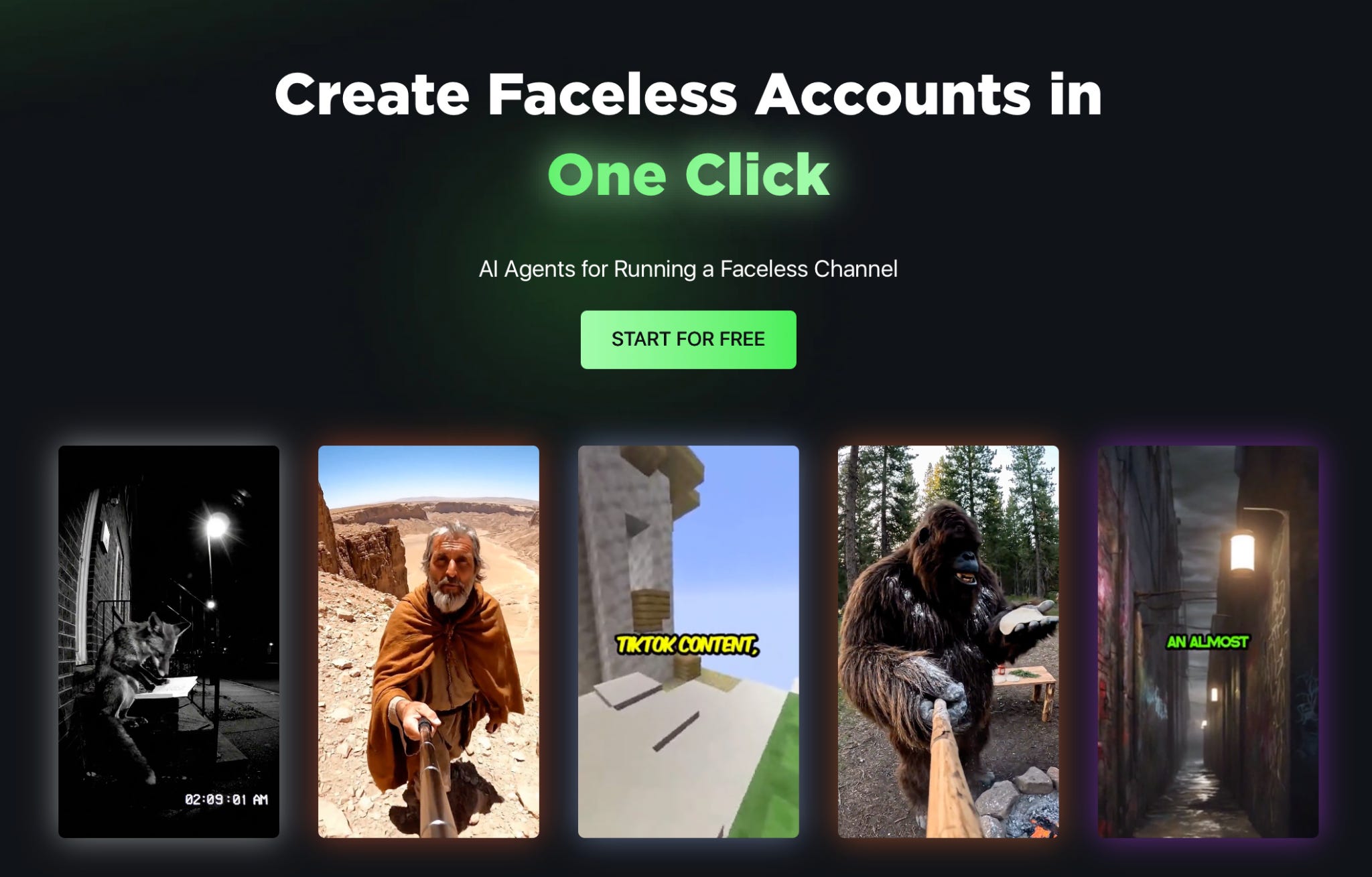
But what about short-form content? YouTube Shorts purportedly pays between $30-70 for a million views. For an average watch time of 3.5 seconds per view, the market rate for ~1000 hours of human attention is dystopically low. This math only makes sense if you are running a content creation sweat shop: thousands of people across warehouses churning out new permutations of cat videos with the hope of hitting your dopamine receptors just long enough that you decide to give it a like, perhaps even a comment.
Luckily for the taskmasters, new forms of monetization have emerged for short- and long-form content platforms. Let’s say you are a memes account. You could get paid to post political content in the guise of a meme, like Iran’s LEGO videos (meme information warfare as they call it). You could advertise an online gambling platform (e.g., the accounts with the “1win” logo). You could launch a cryptocurrency. You could advertise some pharma products, like peptides or supplements. Or, you could sell your account to someone who is interested in doing any of the above.
In the Paraguay case, you know that most people following the account with vaccination updates for Paraguayans are people who could vote in the upcoming elections. Getting your message to these 22,000 people, at the very least, is worth as much as a digital billboard. For more universal types of goods and services like gambling and adult content you do not need to have a carefully manicured audience; you just need middle-aged male attention. You can get that by creating hundreds of accounts that post thirst traps and sports content. When you reach a nice follower size, you cash out. Someone takes this account and changes the content. For the account followers, YouTube/IG/TikTok will not notify you, your feed will just change.
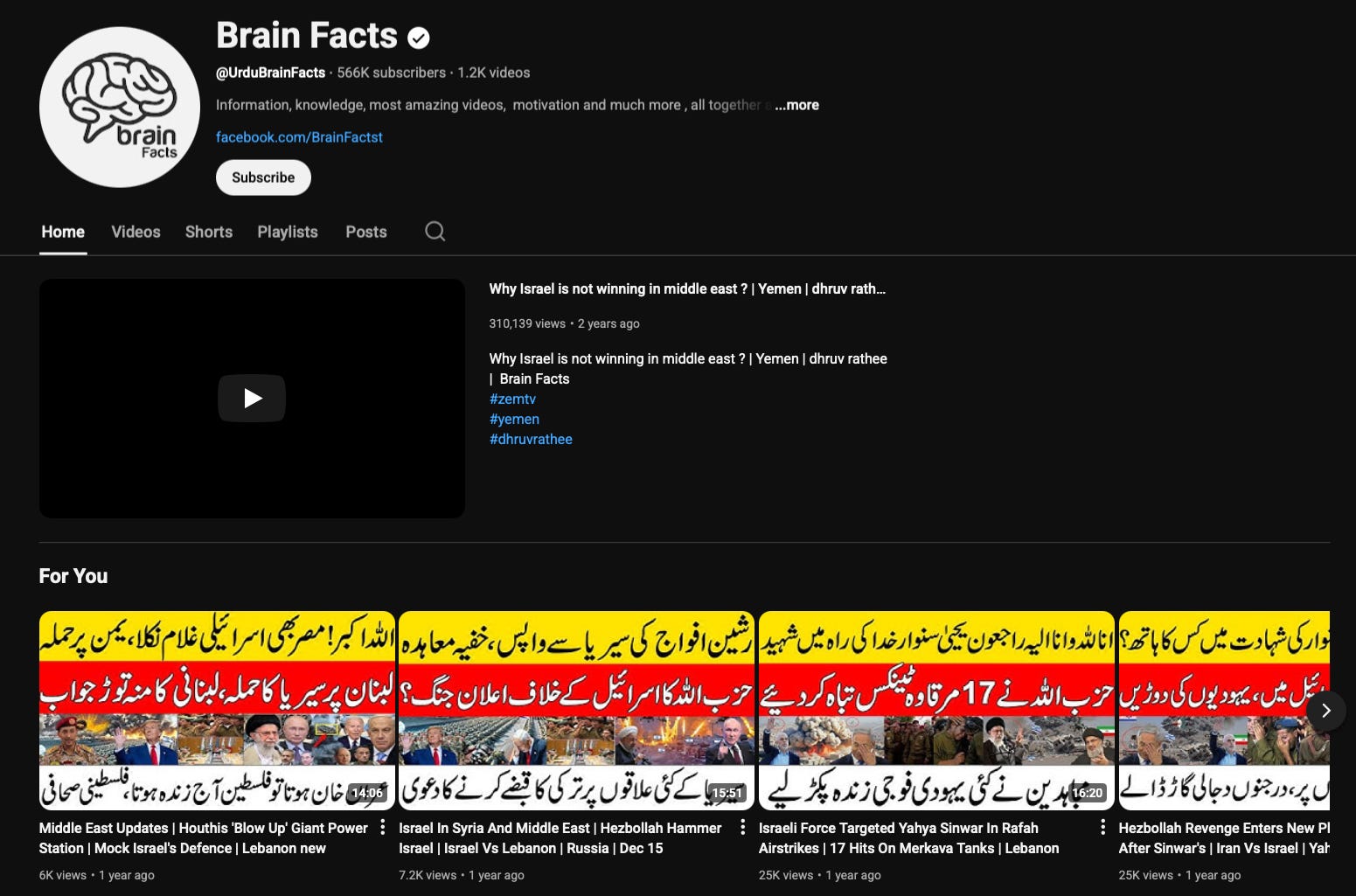
Not all people who are buying accounts are using them for societally-detrimental purposes. Across the accounts that I looked at for our paper on repurposed accounts, there were many cases of vloggers, musicians, wannabe influencers, etc. Some people (and even companies) simply want the veneer of clout afforded by a high follower count. This works because a lot of people still naively think many followers/likes/comments = good. The people who haven’t yet subscribed to Gonzo Labs will likely reconsider their choice once we are in the 4 to 5 digit territory. Such is human nature.
There are no mitigations, only incentives. For laborers in the developing world, there are just enough monetization pathways that churning out faceless content beats a minimum wage––better to harvest attention than corn or whatever. For content platforms, indifference is a sound business strategy: more content, more watch time, more ads served, more revenue. Doesn’t matter who made it or why. And for viewers, the incentive is the scroll itself: an endless, frictionless supply of content optimized to hold attention just long enough. In that state of scrolling stupor the changes are imperceptible by design. As for the content, nobody asks where it comes from or why it exists. Like cheap electronics and fashion, most of the time we don’t wanna know.
All the above and more is available in our paper that’s set to appear at USENIX Security 2026: “Chameleon Channels: Measuring YouTube Accounts Repurposed for Deception and Profit.”