


Recent Happenings
The Pentagon wants $30 million for an AI-based lie detector. Will it just be Pangram?
I found myself around 9pm on a Saturday tweaking the words of my faculty research statement. To get a job as a professor, you need a compelling research agenda: what big issue will you solve? Fortunately, existential risks abound. Every other day, a new martyr emerges from the crevasses of 500 Howard St., San Francisco, CA to warn us about Impending AI Doom™. To date, nobody has offered me a convincing mechanism through which this doom is supposed to happen. But I am increasingly realizing that it is bad for business to keep asking, lest I “fart in the church”, as my advisor would say. My area of work is, after all, safety, harms, and “governance.” As far as everybody who reads my application is concerned, AI is poised to unleash unimaginable evils. “Clearly, only my research can save us”, I typed, and proceeded to close my laptop.
Something still bothered me about the whole thing, like a leech crawling up my spine. Will AI agents really run amok and hack everything? Will we not just create legal liabilities for companies that fail to secure their agents? After all, if a careless teenage hacker can be convicted why not a set of careless adults? Will we not be able to simply unplug the datacenters? Will the self-improving AGI-ready agents able to conscript robots into building more datacenters? Was the HuggingFace hack an inside job? Careful now, these are dangerous thoughts…
I soon ran out of dopamine as I contemplated the implications of these questions. I opened Instagram and ordered the omakase experience. The algorithm’s recommendation for the evening began with a depiction of a “Kirkversary” celebration featuring Cristiano Ronaldo, Mia Khalifa, and George Floyd (seemingly taken in Manoel’s backyard) followed by a series of quick bites featuring multiple scenes involving Epstein, Diddy, and other figures. Somehow, academics studying social media keep finding only small average associations with adolescent mental health. I doubt they have grappled with this content.
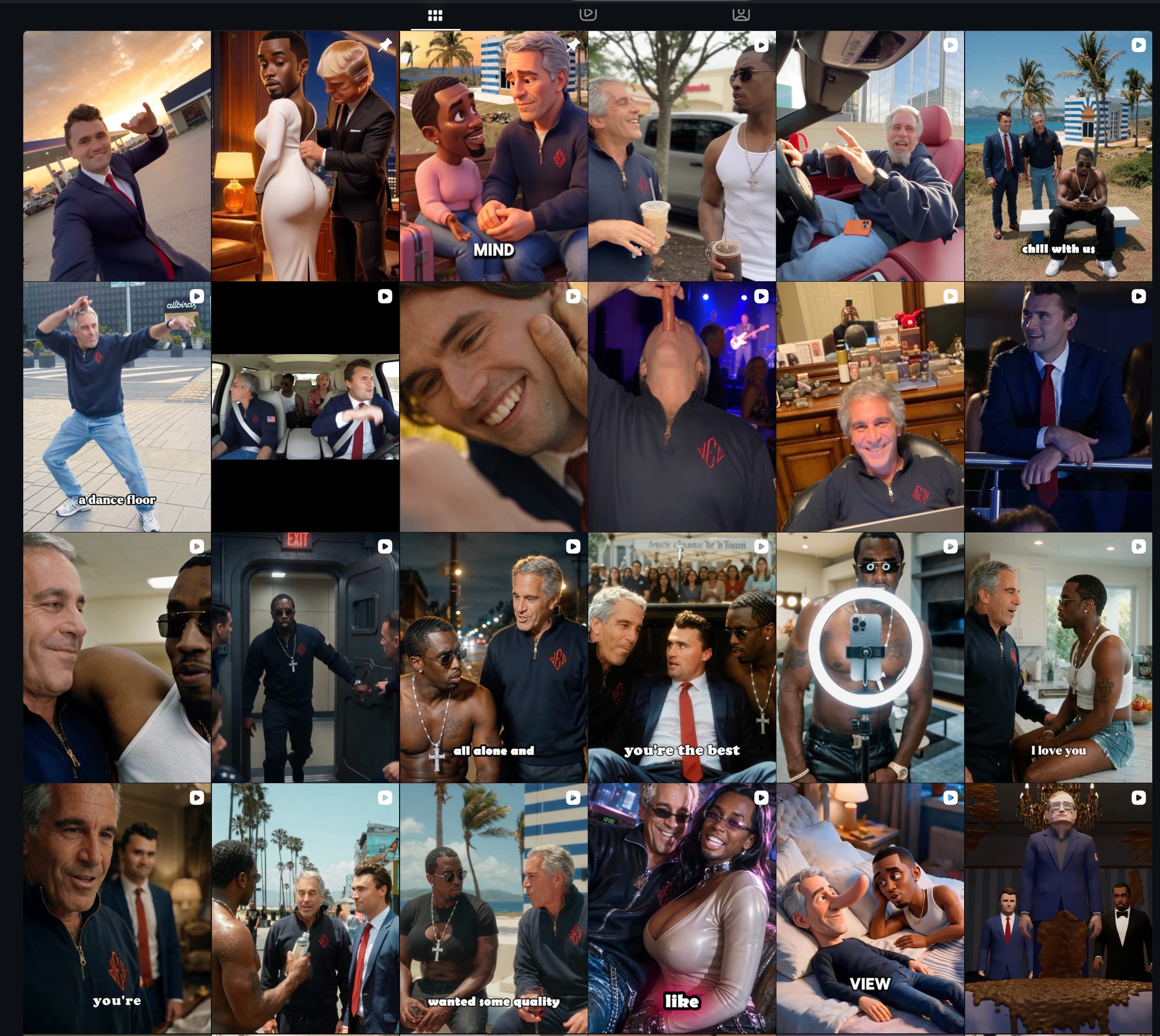
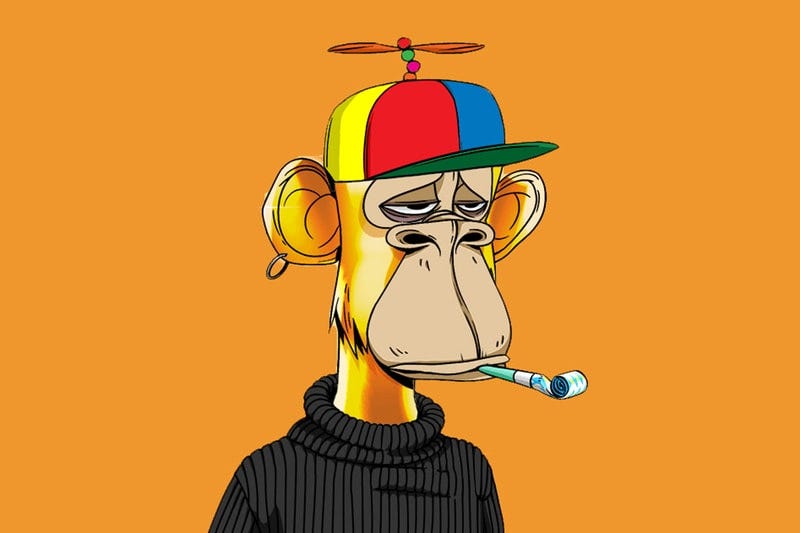
As I take in the heavy imagery in front of me—Epstein, Kirk, Diddy, oil, along with various scatological depictions—I cannot help but feel an uncanny feeling stirring within me. This must be what the classical masters of old experienced when they first encountered Picasso’s cubism. There has been much debate over whether these pieces of media should be considered slop. This debate would make sense if what was at stake was the creative value of these pieces. When NFTs came around we did not argue whether the digital apes revolutionized concepts like space, color, and texture. We all knew that NFTs were a karmic vehicle through which masses of dejected artists avenged themselves by extracting as much money as possible from nerds and jocks who got 6-figure jobs out of college with degrees in business, supply chain, and the science of computers. But this grift did not come out of nowhere. Rather, it was just the latest presentation of humans’ ingenuity to get as much money as possible with the least effort.
Capitalizing on vibes has gotten monotonically easier. People with large followings on social media successfully argued to big brands that they could influence people to purchase things and hence they should be paid $10,000 to post something on Instagram. While boomers scoffed at this, the arrangement was entirely sensible: there’s a product to be sold, a marketing budget, and an audience that is keen to buy the thing that is advertised by the influencer. Influencers quickly realized they could own the means of production: why let the company capture all the value?
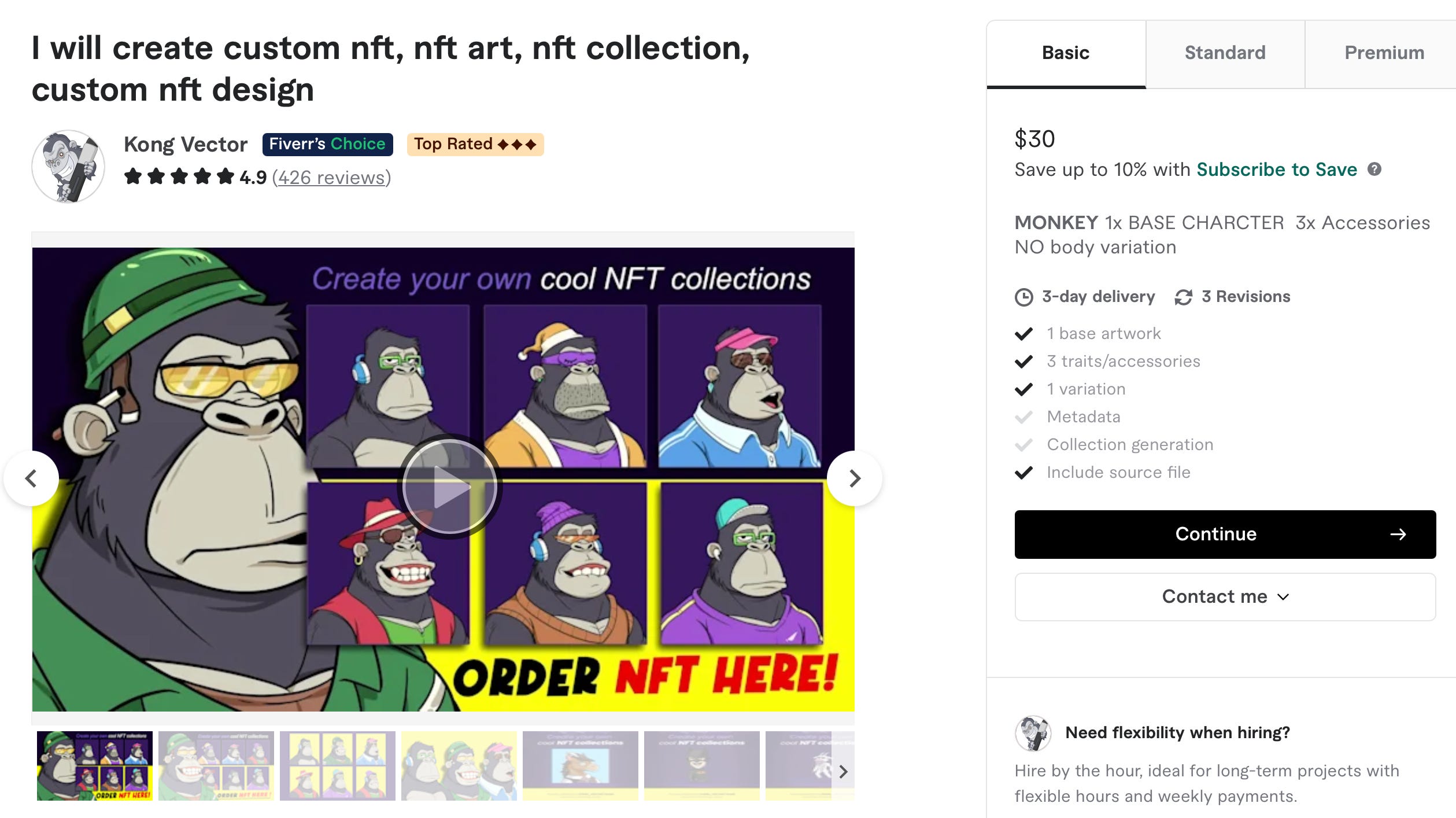
Like this, many influencer brands were born (think, for example, Kylie Cosmetics). But vertical integration is a hassle. Creating content and managing a supply chain can be a lot. What if you just wanted to focus on being an influencer? For such cases, people monetized their influence through dropshipping. That is, you take an order for a shirt but some third-party somewhere handles the fulfillment. But this is STILL a hassle: procuring products that can break and dealing with people who want refunds are less glamorous than being cute online. Thus, influencers opted for digital products like e-books and online courses. If you had the wherewithal, you could also dabble in the sale of spicy pics. Against this backdrop, it is easy to see how NFTs were the perfect digital product. Pay someone on Fiverr $50 for 1,000 images, and sell them for $1,000 each.
Somehow, this was still too much of a hassle. “Let’s just forget about the image part”, some people thought, “why don’t you just give me the money?” Short of asking people to Venmo them money directly, influencers began dabbling with “meme coins.” Meme coins are cryptocurrency tokens like any other. These tokens don’t do anything that can’t be done already; they are equivalent to digital Monopoly money. In a more innocent world, a person would create a token called $DICKBUTT, send it to a friend, and have a chuckle together. But no, they instead became speculative assets. People are willing to pay money for them because they believe other people will also be willing to pay money for them and if enough people want to buy them and there is a limited supply then it stands to reason that their price will go up and if you bought low you will then get to sell higher. This is called Ponzinomics.
People with large audiences thus had the following opportunity: spend $50 to create 1 million coins and sell each coin at some amount that yields a sizeable enough return. No need for an image, book, or course, just pure transfer of wealth from the poor to the clever. Many influencers, from all walks of life, were swayed into getting a taste of both NFT and memecoin grifts. Lest we forget:
Mila Kunis and Ashton Kutcher — Stoner Cats NFTs (2021)
FaZe Kay and other FaZe creators — Save the Kids token (2021)
Logan and Jake Paul — CryptoZoo NFTs, StickDix NFTs, $ZOO (2021)
Lil Uzi Vert — Eternal Beings NFTs (2021)
6ix9ine — Trollz NFTs (2021)
Lana Rhoades — CryptoSis NFTs (2022)
Caitlyn Jenner — $JENNER (2024)
Iggy Azalea — $MOTHER (2024)
Andrew Tate — $DADDY (2024)
Jason Derulo — $JASON (2024)
Waka Flocka Flame — $FLOCKA (2024)
Haliey “Hawk Tuah” Welch — $HAWK (2024)
Donald and Melania Trump — Trump Digital Trading Cards (2022), $TRUMP (2025), $MELANIA (2025)
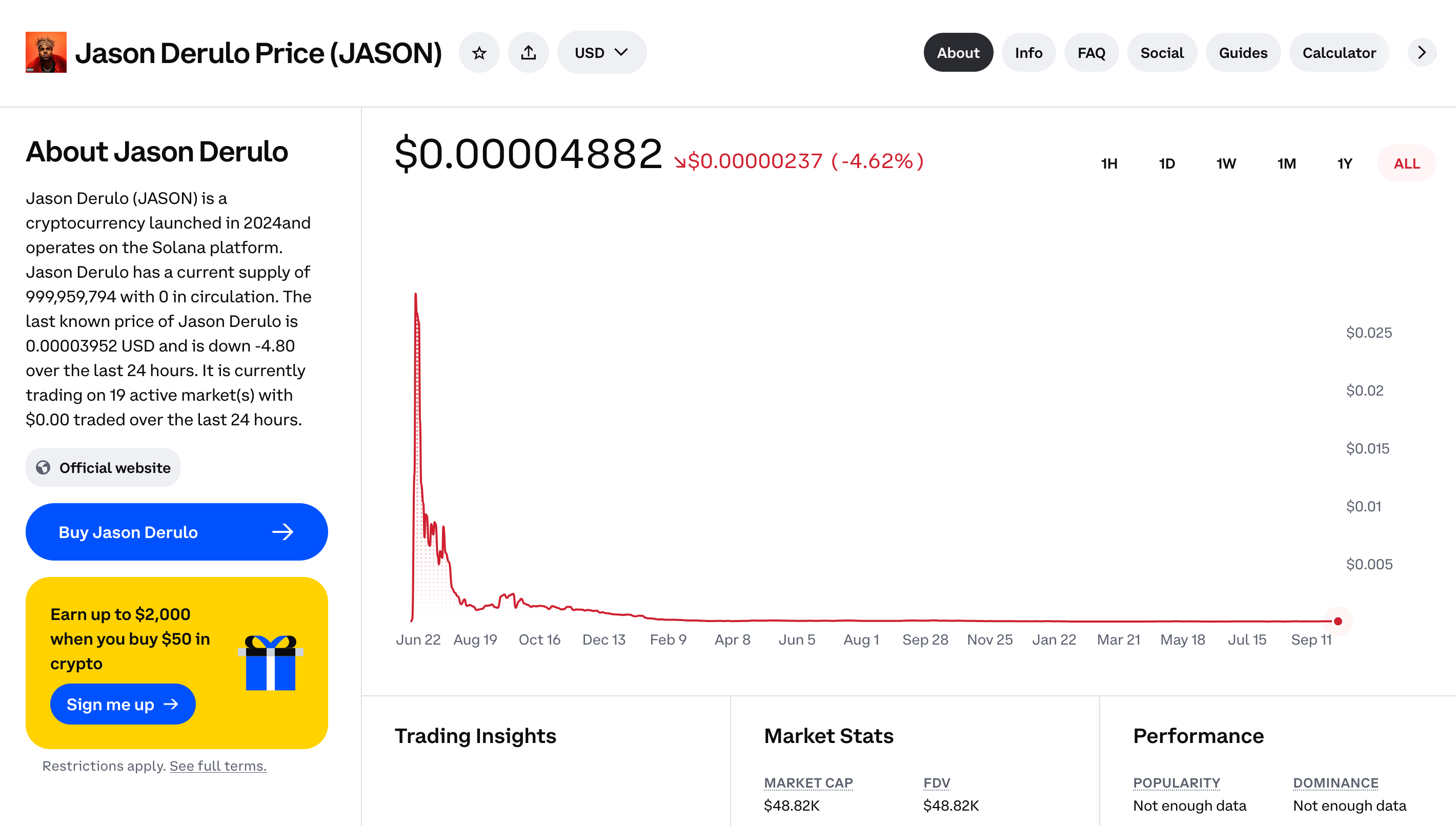
This is how cryptocurrencies made the monetization of large audiences maximally efficient. However, you still need a large audience. Whomp whomp.
Building an online audience is tedious but kids are not dissuaded by this. Since about 2021 reports estimate that over 60% of kids want to be influencers. Today, the American Academy of Pediatrics has a dedicated page with evidence-based guidelines on how to talk to your child if they want to be an influencer. The same is true of adults. There’s no shortage of individuals willing to subject themselves to duress or other humiliation rituals for a ticket to influencerdom. For those who want to grow more “organically”, they ought to invest days and weeks developing a craft, nagging their friends and colleagues, and “putting themselves out there” month after month. This investment has yielded me ~85 subscribers. Not enough yet to launch $GONZO, but soon enough I might at least get a VPN deal. Anyway, what if there was an easier way to solve the audience creation problem?
Jean Phil (né Jean Philantrope), much like Cubism, emerged to the world in France in an Instagram post dated September 17th. This conceivably European man with a blond bob, curled mustache, and brown Detective suit reached 145,000 followers in three days, according to sources familiar with the matter. Around this time, other weirder creatures would be descending on Paris for the annual fashion week. Against that backdrop, this man looked not only plausible, but perfectly reasonable. He is best known for appearing in his videos throwing gang signs and punching the air. His surroundings vary, but the essential arrangement remains: Jean, his haircut, and his signature shadowboxing. One TikTok upload received 5.6 million views. At an average of 5 seconds per view, this amounts to ~7,777 hours of sunk human attention.
Jean Phil was absurd, but not so absurd that people refused to believe in him. People want to believe that such a ridiculous being exists in the same people that people want to believe that a person can do this. Viral templates are not new and when a template is proven to work, the masses flock to it. In the past, however, catching a viral wave required effort: a camera, basic coordination, and editing time. AI removes much of this friction. Jean Phil can be placed anywhere with a few declarative sentences in a chat interface. Because of this, other hustlers began making their own versions within hours. Some copied Jean directly. Others created adjacent characters, including an English rival named Archibald Brown. Every copy increased the size of the wave. Opportunists: critics, fans, AI tutorial sellers, AI companies, etc. all wanted a piece of the action (a sample of actual videos is shown at the very end).
But what justifies burning a few trees in exchange for a video? Attached prominently to Jean Phil’s profile was a Pump.fun ticket to a digital game of musical chairs. At 18:11 UTC on September 19 the account owner realized that they had hit it big and it was time to cash in. Right then, a cryptocurrency wallet launched the token $JEANPHIL spent about 0.401 SOL (less than $50) and acquired 13.63 million tokens as part of the launch.
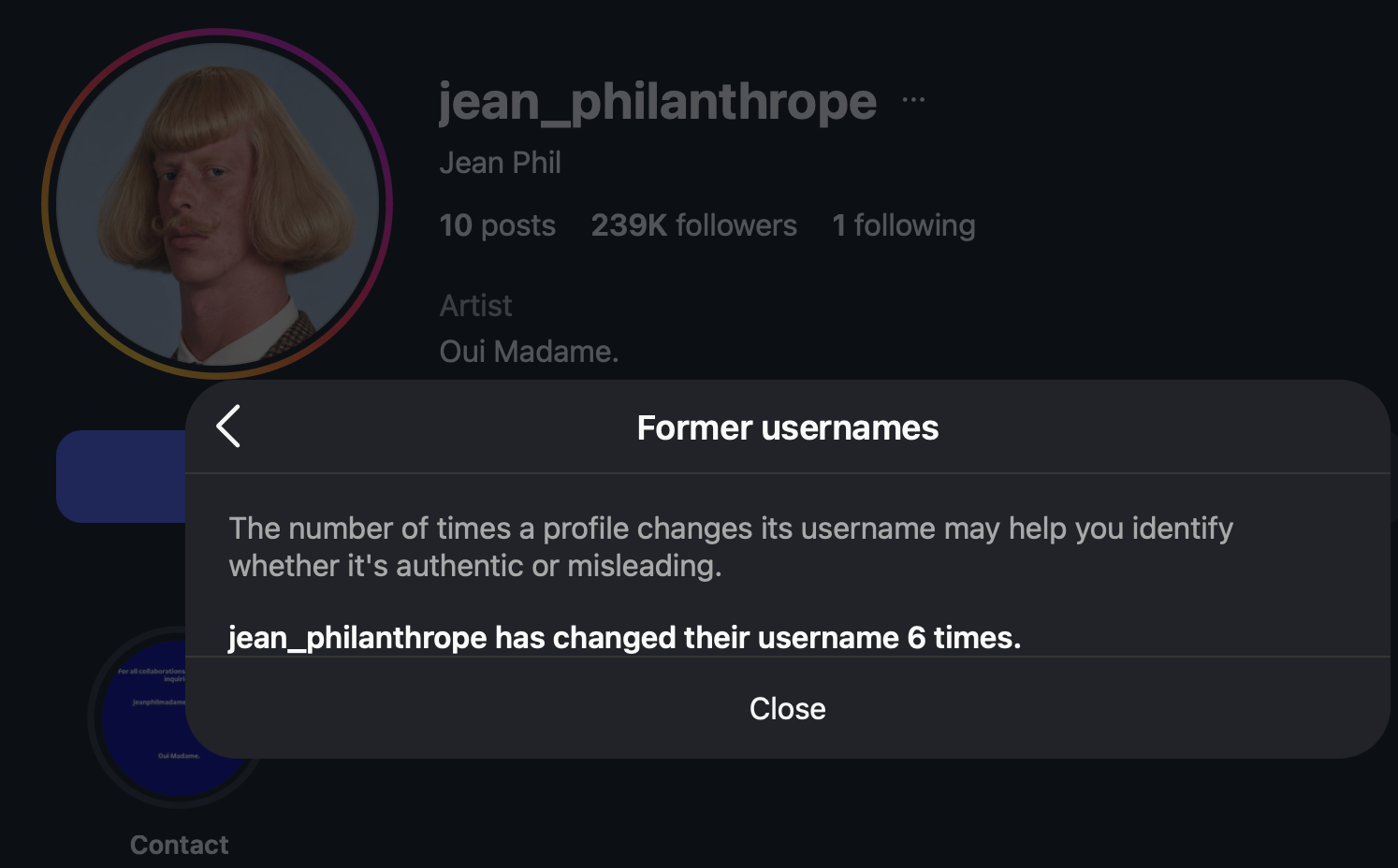
The token briefly reached a reported market capitalization of more than $12 million. While impressive, this number means little in cryptoland but gets quoted a lot so we should talk about it. It does not mean that the creator made $12 million, nor that $12 million entered the project. This is simply the number of tokens in circulation times the latest price in the market. A more meaningful assessment of the situation is that there are allegedly 18,000 holders1. At some point, Monsieur Jean is going to try to sell as many coins as possible to whatever open bids remain in the market (what is called “pulling the rug”). They could do so now given that there is approximately $385,000 in liquidity. This used to be the main way creators profited from a meme coin but the scams lasted very little time. To mitigate this, Pump.fun also pays token creators a portion of the fees generated by trades, which means you can wait a little longer before you abscond with everybody’s money. This French publication estimated that Jean Phil’s creator had earned more than $100,000 in fees, not bad for a lottery ticket payout.
Will they also get lucky?
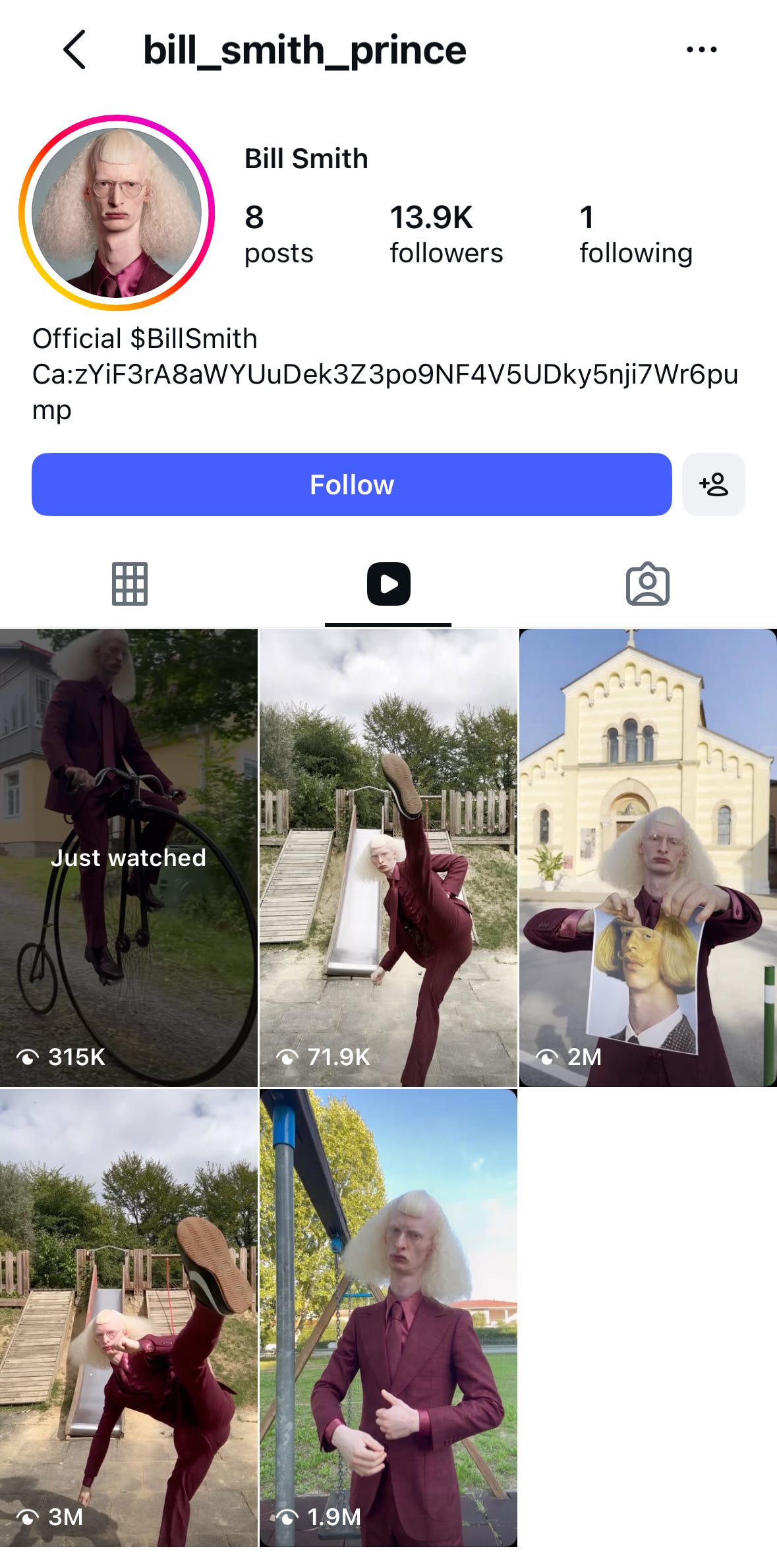
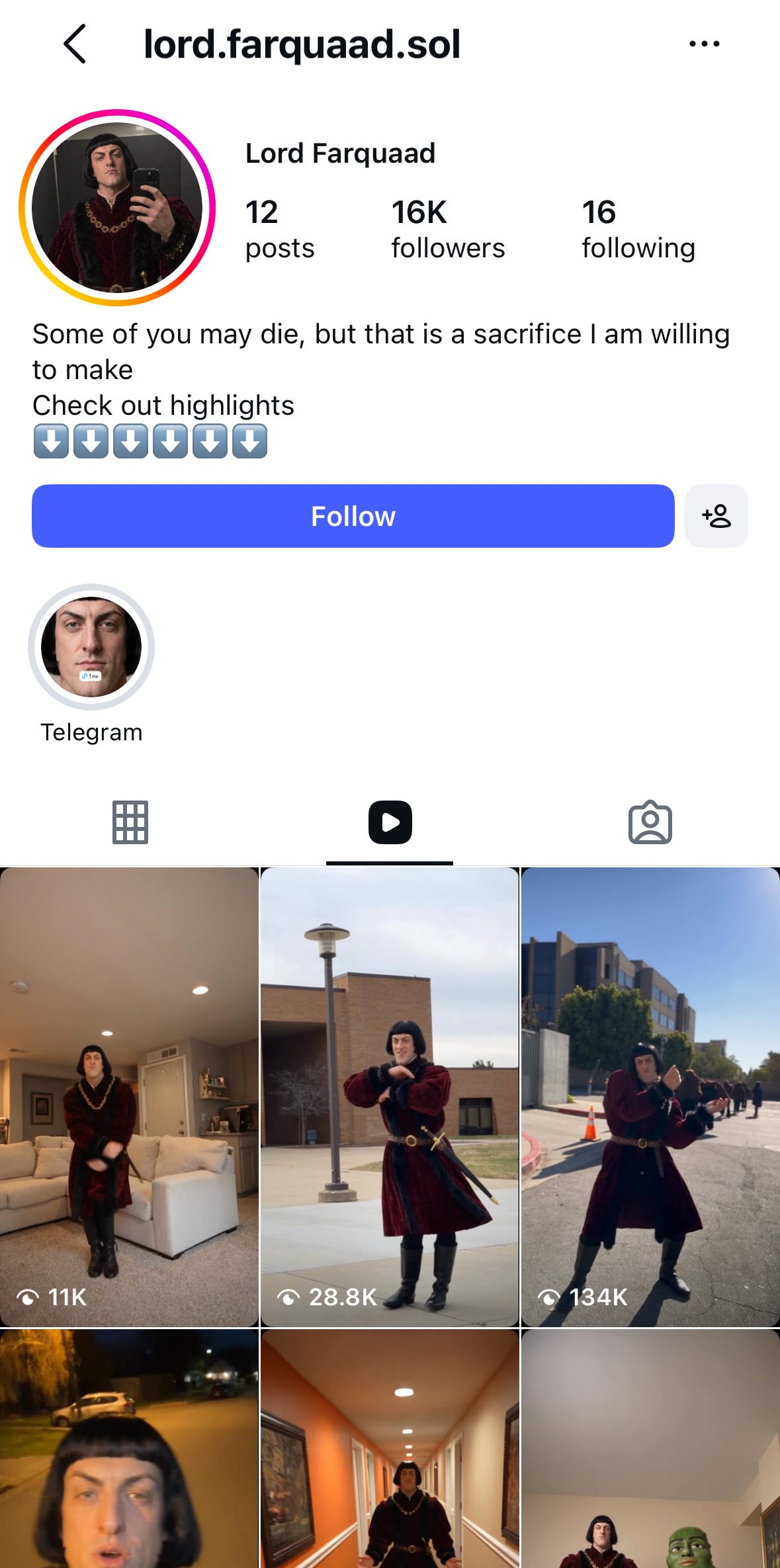
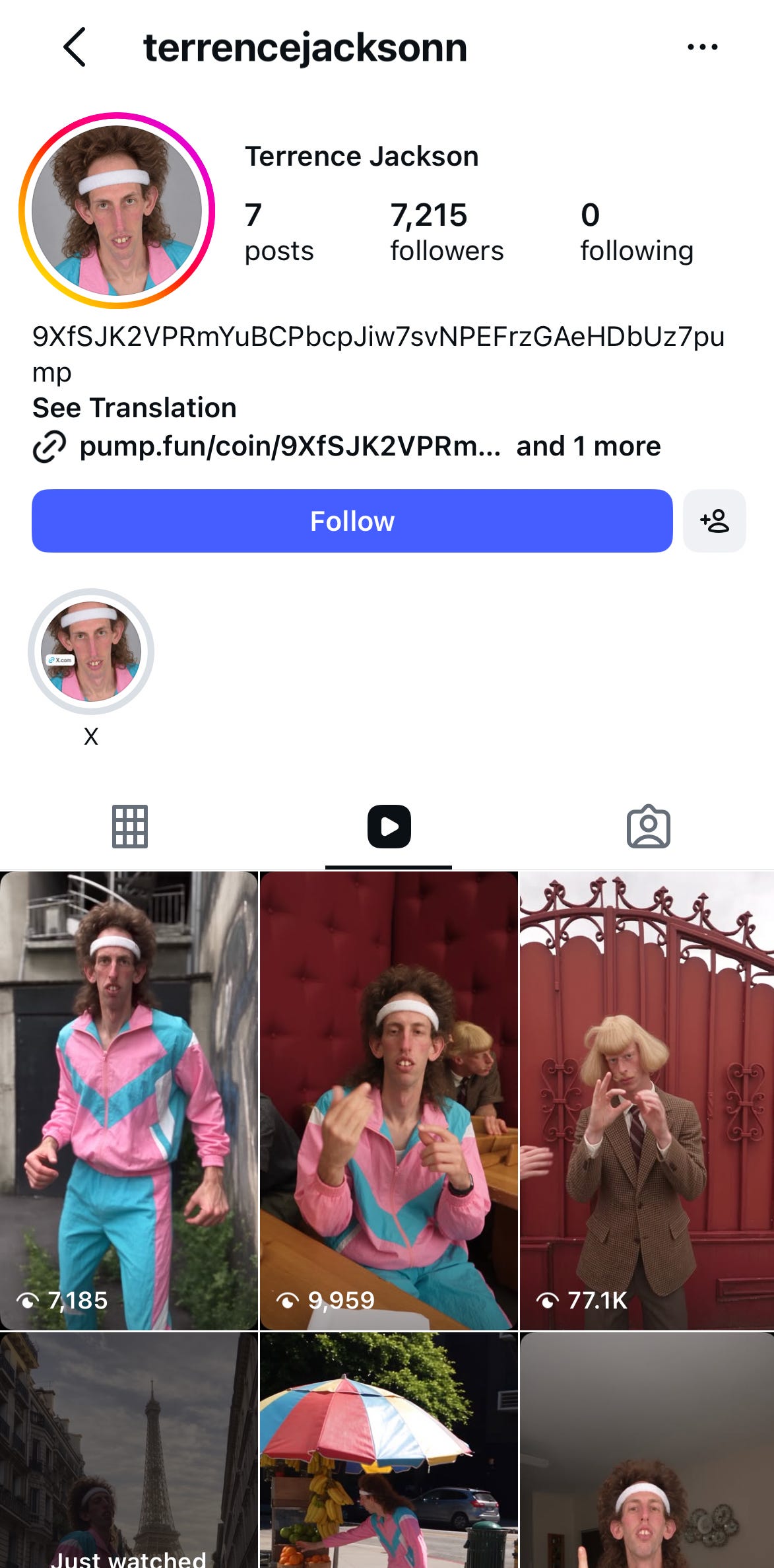
Cryptocurrencies solved the question of extracting money with the least amount of effort. Similarly, AI is solving the question of building an audience with minimal skill. At some point these two functions will approach the singularity and converge into an optimal device that maximally captures attention and instantaneously monetizes it. AI can undoubtedly find and exploit software vulnerabilities. But, can AI alone in its omniscience formulate such an impeccable grift: a blonde man throwing gang signs and peddling artificial vaporware? 60,000+ abstract submissions to ICLR and I bet none of those proposed a grift benchmark, smh.
I have little fear for the apocalyptic view that AI agents, like locust swarms, will raze the Internet to the ground—not on their own, at least. The devil, after all, comes not with fire but with soft words. If the world is burnt to the ground through videos designed to fry neuroreceptors for the vague promise of fame and financial gain, we only have ourselves to blame.
Adjacent Reading
Meme Coin Factories: Uncovering Large-Scale Manipulations on pump.fun
By my former lab at CMU.
Appendix
Below is a sample of all the videos that propelled the meme (you will need to open on Substack for a better viewing experience).
Then the hype beasts
Then the explanations
Then the critics
Then the tutorials using clips from the critics.
Then real people imitating the artificial meme
And then even the AI companies
Another number that can be faked but at least requires more effort to do so.