


Recent Happenings
See below!
“So it’s come to this.” This was the title of season 4 episode 18 episode in The Simpsons. Homer goes into a coma and, at the hospital, the family reminisces on happenings from the first three seasons. This was the very first “clip show” in the show––preceded by 76 original episodes––engineered to give the overworked staff a break. Clip shows are part of an arsenal of tricks that production teams have to frequently employ to deliver top-notch content on tight schedules to satisfy hungry and demanding consumers.
In no other place is this more visible than in Japanese media––particularly in anime and manga––a country in which hospitalization from overwork is seen as a badge of honor. Animators are paid little and pushed to the very limit because the «system» knows that passion is the fuel that makes palatable sacrificing everything. Even within the shows that are produced, where imagination can transform the empty canvases into anything, the same themes are reproduced.
In the first episode of “Shirobako,” an anime about young people’s efforts to break into the industry, an illustrator collapses with a fever as a deadline looms. The cliffhanger ending hinges not on her health but on whether the show she is drawing will be finished in time to air.
PhDs resonate with this. I started undergrad in 2014, the same year Shirobako aired. Every year since, I’ve seen academics toil away mercilessly, constantly committing acts of self-flagellation as penance in front of some Future that holds certainty and stability hostage (a.k.a. tenure, which rhymes with ten year, which rhymes with that’s a long time). It’s easy to fall into this pattern; it is harder to find ways to make this lifestyle sustainable. But that’s the challenge we must overcome. And, if we learn from the best, we see that you must employ production artifices to keep your sanity.
So it’s come to this: my first very own roundup of stories, since my first clip show already aired. Following is a collection of things that I’ve found amusing with some meta commentary; a listicle as marketers would say.
Tiny drones patrolling your property and obliterating mosquitoes
This startup promises to delete mosquitoes using mini drones. Each drone costs $50/mo or a one-time payment of $1,100. They will fly around your property locating and intercepting mosquitoes. When low on battery they will find their charge station, take a lil break, and keep going. The key technical challenges, as described by the founder, were the engineering of a board that was lightweight enough to power a sonar system that could detect mosquito noises within a few meters. The next challenge was to use discriminate mosquitoes from other useful flying things, like bees. Fortunately, the sound signature between these insects was distinct enough.
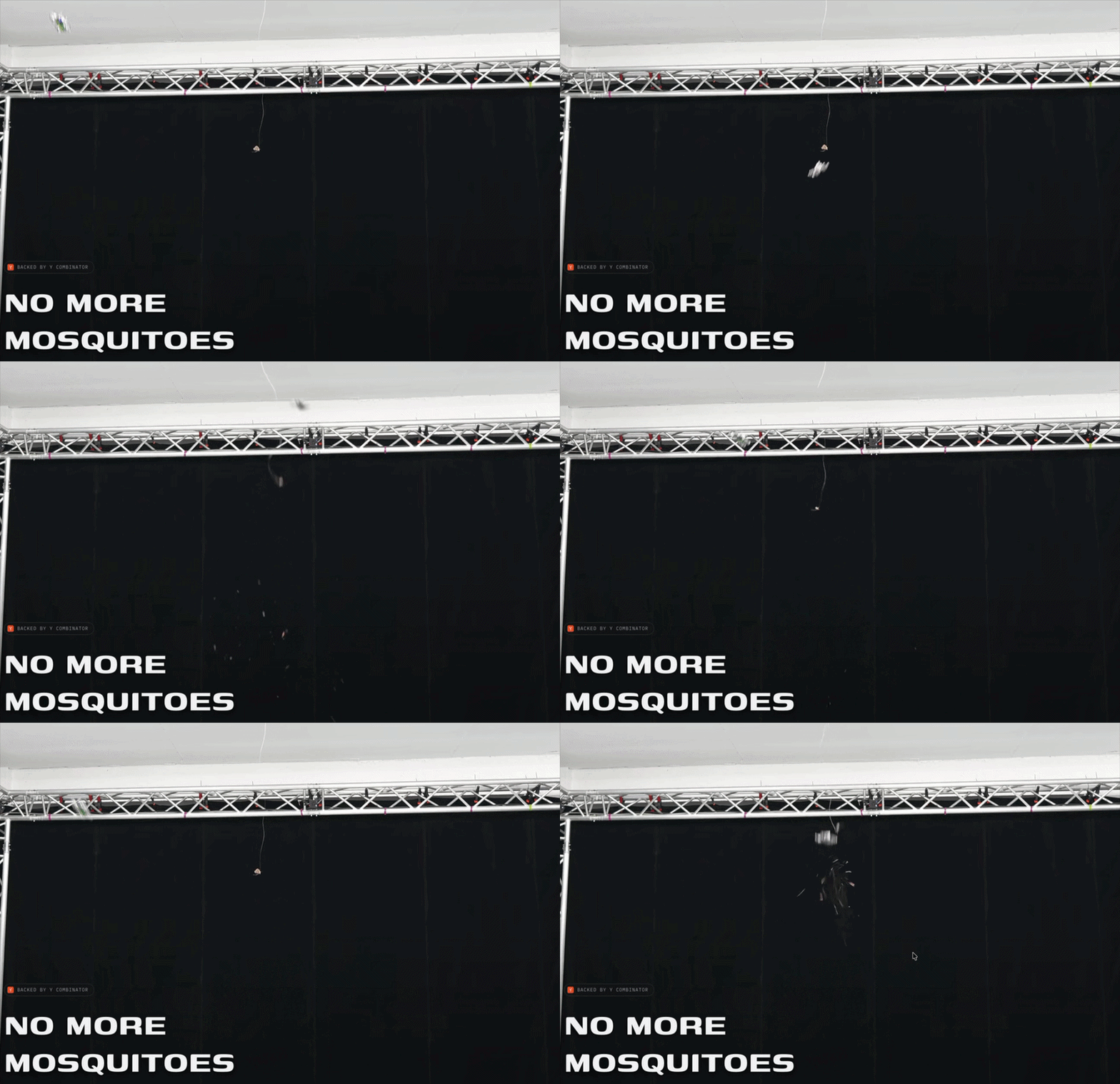
Tornyol’s manifesto claims they “will be able to completely eradicate mosquitoes from areas where humans live.” The plan is to not only chase mosquitoes around but to map out mosquitoes’ reproduction cycle and then somehow use this information to eradicate them at the source somehow. An ambitious goal and perhaps doable in open spaces, yards, fields, etc. But will they survive an urban area’s obstacles? Can they co-exist with humans and birds? It would suck to pay 1 grand to just have the little bastard run into your face and explode. Will they take refunds?
This is probably my favorite YCombinator startup so far, simply because it solves a legit real world problem––unlike the other startup we will see below. It is also interesting to think of the mainstrification of tiny drones. What other areas of our lives will these tiny robots infiltrate?
A startup that says the Internet is Crap so why not make it Crappier
On the other end of the VC-backed spectrum we have a startup that wants to purportedly “kill the Internet” by commoditizing propaganda campaigns with AI influencers. The idea is not new. Click farms have been around for quite a while: hundreds and thousands of phones mounted on shelves with software (or operated by armies of low-paid laborers) to bypass bot-detection algorithms on social media platforms. These accounts interact with content, share, comment, like, etc. in hopes of making specific things viral.
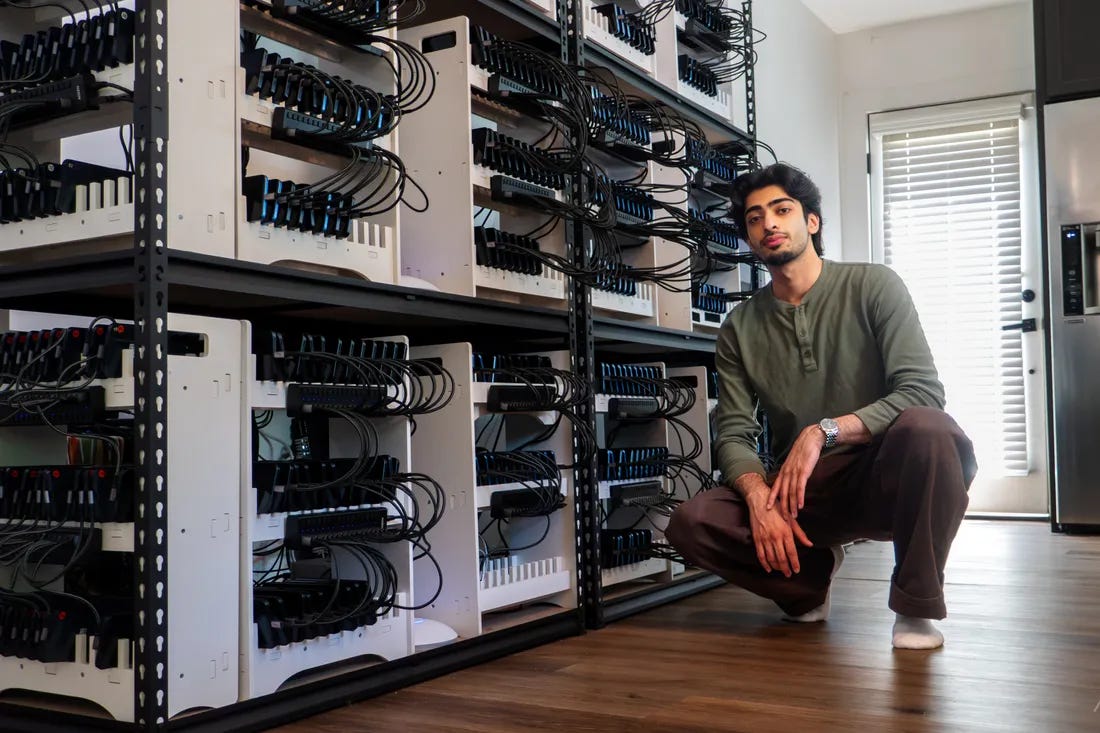
The problem with this startup is that it’s too in the nose. Of course influence-for-hire exists. Any modern country worth their salt has access to, at the very least, a shady network of operators who do this. See the Bees Army, Team Jorge, Storm-156, AK Trolls, 50 Cent Army, and the innocuously named Internet Research Agency. We are missing fancy names for US-based teams, but we know this also happens here.
It is one thing to have state-sponsored information warfare teams and entirely another thing to have for-profit consumer-facing companies providing these services to brands, musicians, and grifters. And yes, people absolutely fall for it (see Geese psyop as a prominent and recent example). The idea that any mortal could access military- or state-level weaponry gives off the most heinous of vibes. Imagine if buying robots that kill bigger things than mosquitoes were freely available––like these robot dogs but equipped with guns–– and owned by the least sane person you know.
I digress, but not too much. The whole interview with the founder comes across as bait, deranged, sociopathic, or all of the above through quotes like “dystopias are merely opportunities to be exploited.” Perhaps there’s something soberingly comforting about how their evil intentions are laid out bare; no presumption of innocence, just good ol’ evil. Or, perhaps they play up the villain bit because the product barely works and they desperately need people to buy into the narrative. Only time will tell.
State-sanctioned insider trading
To talk about the next story we need to re-visit a $300 million that took place in the wasteland that sits between Chicago and New York. A company called Spread Networks laid down a direct line of fiber optic glass that would shave off the time it took for information to flow between the two cities. The savings amounted to a few milliseconds. This was enough to be appealing to high-frequency traders, who could execute millions of trades just a bit faster than their competitors at marginally better (but real) prices: the difference between owning the future and reading about it. So, firms paid for the privilege to tap into this filament of glass. All of this and more was part of Michael Lewis’s book, Flash Boys. The main takeaway: having access to information that moves markets faster than your competitors is worth money.
This is what President Trump seeks to replicate. He plans to charge a premium for faster/privileged access to Truth Social posts. The idea is simple: the President of the US announces on social media some big event (e.g., a new invasion), Wall Street traders see this announcement and expeditiously buy shares of Lockheed Martin before others do, and profit. This arrangement presents a nasty onion of conundrums. Faster access to an API endpoint is not in itself unreasonable. But it does become unreasonable if it’s gated to only a few individuals and contains information that when shared is not yet public. But maybe it’s not unreasonable anymore if anybody can buy it. But it does become unreasonable again when the main shareholder is himself the mover of markets and the President of the Free World™. But overall doesn’t seem as bad when we remember $TRUMP coin. Who knows.
A collection of FIFA-related stories
Today is the final game of a tournament that brought us many controversies and conspiracies. From the start, we had outrage around ticket pricing and market manipulation. We got an uncomfortable situation where players and staff had to promptly leave the US after their matches. We had controversial new rules and an increased reliance on tech to help with referee rulings which did not help the complaints against biased rulings on the pitch. As usual, we had claims of corruption. We had a massive surge in sports betting and prediction markets. But most surprisingly, this was the first sporting event where I encountered so much mis/disinformation.
Perhaps it was only a matter of time. After all, sports are tremendously important political vessels. Geopolitical disputes (e.g., Argentina v. England and the Falkland/Malvinas) and historic rivalries tracing back to colonial eras resurface on the pitch. Against this backdrop came a deluge of AI forgeries inciting division, vitriol, and hatred (e.g., deepfakes of coaches/players in press conferences insulting countries, peoples, religions). This content was then amplified inorganically (by armies of bots or human clickers) and even organically (by influencers and pseudo-intellectuals hoping to catch a wave of virality). As a result, this World Cup felt to me as one of the most divisive.
For more on the subject, here’s a collection of articles by the Global Investigative Journalism Network.
Bonus: a cool technology wrapped in a heinous concept
A “top signal” is used to refer to a signal that indicates that an asset has reached its peak valuation and the market expects it to drop. Colloquially, it is used in any situation where something has reached peak hype and that something can’t keep being that valuable or popular anymore. In the last cryptocurrency cycle, a top signal was a NYC bathhouse mining Bitcoin to heat its pools. The crude reason of why this is a top signal is because if anybody is seemingly making money in the most asinine of ways then something is wrong.
Another spa-related top signal may have just dropped: the Midjourney Spa. Midjourney is a product that let you convert text into images, one of the OGs in the space. They made copious amounts of money and now for their next foray, they want to build a machine that will use ultrasound to map your body better than an MRI machine, without the dangers, and with a Bay Area flavor. Their technology would require people to submerge themselves inside a tub of water while the sound waves fill through your body’s crevasses and generate images. To attract people they figured they’d turn this into a spa experience.

I had not considered the prospect of getting medical imaging done while enjoy time in a hot tub, and I can’t say I’m too keen on reconciling these two experiences. San Francisco dwellers seem to disagree with me. But not just on the imaging side. The snippets of conversation I was able to pry on depict a technofuturist oasis where each persons gets to precisely engineer the optimal vibes for maximum relaxation. Below is some illustrative discourse from their Discord channel, #spa-ideas.
Will waterfall walls be free-falling sheets of laminar flow with a potential high crashing dB?
— A user who is worried about the waterfalls being too loud
A thought I had about reducing anxiety and cognitive load throughout the spa experience. After changing into their robe, each visitor receives a weighted orb that accompanies them through the entire journey. The orb isn’t intended to be another piece of technology, screen, or navigation device. Instead, I imagine it more like a modern “worry stone”. A comforting object that people naturally hold, fidget with, rotate, and interact with while waiting or reflecting. Instead of displaying directions, the orb could communicate through light and subtle pulses while the environment itself provides guidance. When it’s time to move, architectural lighting, pathways, or destination markers could illuminate in a matching color. Visitors simply follow the light.
— A user who provided a drawing of a sphere to illustrate the concept
would be cool to have a closed feedback loop system to induce relaxation and actively monitor one's state and adjust accordingly the subtlest of signals from one's environment has implications on a person's state of consciousness.
— Another user who is worried about being overstimulated
You should use the midjourney servers to heat the spa and sauna, enjoy the gentle heat of our server room
— A user who didn’t get the Bitcoin mining memo
I think it may not be the worst thing to have a more spacious waiting area by the scanners where natural conversation might arise.
— A user who is interested in the prospect of meeting a mate before their ultrasound session.
Probably need security since ppl like touching others when they arent allowed to
— A user who is a bit worried of other San Franciscans
The 30 mins I spent looking at that Discord channel sent shudders down my spine. I found the prospect of applying precision engineering to relaxation an oxymoron. I’d rather refute modernity and embrace ape.
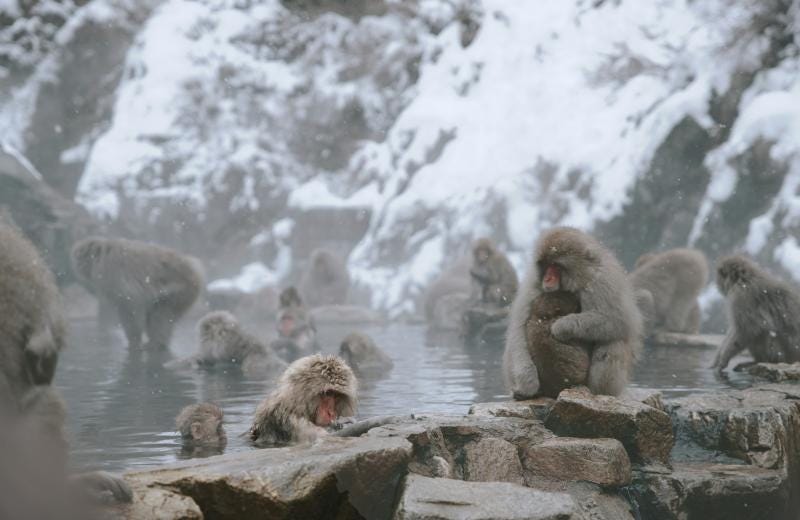
If their spa fails I’d be okay with that. But I hope their cool imaging technology actually delivers on its promises. Hope you enjoyed this roundup, see you next week!
Adjacent Reading
See above!